
AI Agents & Infrastructure
Ryph
Open-source AI agent orchestration platform for incident response and automation
- 0community votes
- 0DR by Ahrefs no change since last check
Ahrefs Domain Rating signal 13 Nov 2026, signal shifted 5 Nov 2026.
Ryph runs coding agents in sandboxed environments on your own infrastructure, handling incident response, automations, and code work with security controls that
What it is
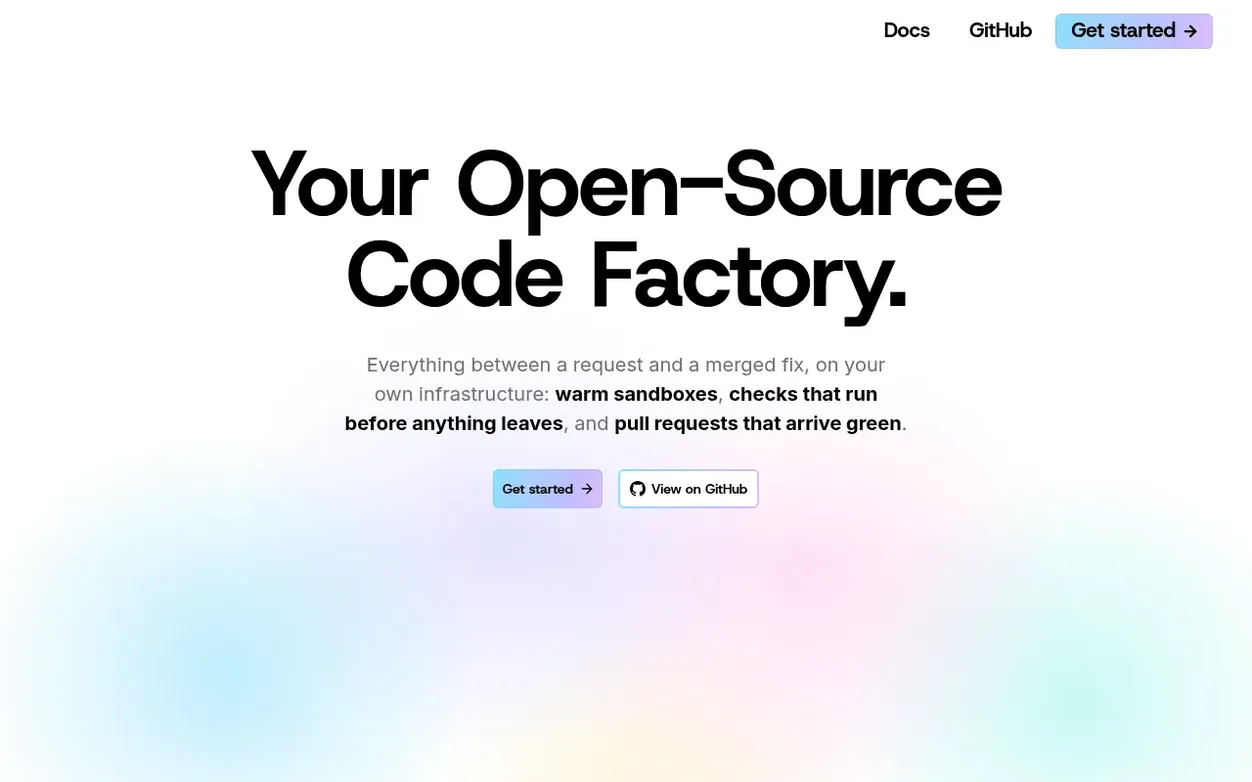
Ryph is an open-source platform for running coding agents on infrastructure you control. Agents join incident chats to investigate and ship fixes, run automations on schedules or webhooks, and handle code work through GitHub, GitLab and Radicle.
The platform emphasizes security by design: credentials stay behind gateways, agents never hold keys, and work leaves the sandbox as patches rather than direct pushes. Each run starts from a customized environment with your dependencies and build cached, and agents share learnings across runs through semantic memory.
Ryph deploys as a single binary on your laptop, Docker Compose on a server, or Kubernetes for teams, keeping your code on your own infrastructure.
Systems
- Incident response with agent investigation and pull request generation
- Automated workflows triggered on schedules or webhooks
- Agent summoning from GitHub, GitLab and Radicle with /ryph command
- Semantic memory system for shared and persistent agent learning
- Credentials kept behind gateways with no access in sandbox
- Customized environments per repository with cached dependencies
- Browser use for agent interactions with live watching
- Artifacts and pages for reports and overviews
- Deployment options from laptop to Kubernetes
- Tool proxy with allowlisted MCP server integrations
Pricing
Pricing model: Open source
Want to see what Ryph does next? Follow them for milestones, new products and stories by email.
Ryph metrics
Signal readout for ryph.ai: Ahrefs Domain Rating and Majestic link signals, arrows for the change since the last scan.
- 0 Domain Rating no change since last check
- 0 Trust Flow no change since last check
- 0 Citation Flow no change since last check
- 0 Referring domains no change since last check
- 0 External backlinks no change since last check
Ahrefs Domain Rating signal 13 Nov 2026, signal shifted 5 Nov 2026. Majestic signal 5 Nov 2026, signal shifted 5 Nov 2026. Link signals from Majestic. Trust Flow, Citation Flow and Topical Trust Flow are trademarks of Majestic-12 Ltd.
Ryph domain signal
Show the signal details
Public RDAP record, last read 11 Nov 2026, 08:35 UTC.
- Domain age 2 months
- Registered
- Expires
- Registrar GoDaddy.com, LLC
- DNSSEC Not signed
Ryph post-launch signal
The record for Ryph after its launch on Nexora Launch (5 November 2026), from the readings we keep.
- 0 Domain Rating (Ahrefs) no change since launch
at launch: 0 (5 Nov 2026); latest: 13 Nov 2026 - 0 Trust Flow (Majestic)
first measured 5 Nov 2026 - 0 Referring domains (Majestic)
first measured 5 Nov 2026
Day 7 since launch. Next receipt: day 30, 5 Dec 2026. A change here is a reading, not a claim about its cause; lots of things move these figures. Anything we do not measure is not shown.
Got a launch coming up?
Plan your launch with our free playbook, from preparing your listing to choosing more launch directories.
Quick answers
- How do agents handle incident response?
- When an alert fires, an agent joins your team's incident chat (Slack, Discord, Telegram or Zulip). It reads the alert, queries your metrics and logs, reviews recent commits and runbooks, and posts what it finds. Team members can mention it to steer it. Once it identifies the cause, it can write a fix, run your checks, and open a pull request for review. When the alert resolves, it wraps up the conversation.
- What prevents agents from being exploited with hostile input?
- Ryph assumes any agent can be manipulated by hostile issues, web pages or chat messages. Credentials stay behind gateways, agents have no git keys, and work leaves the sandbox as patches that require review. All tool calls go through allowlists, internet requests through an egress proxy with host restrictions, and every request is logged and checked against what the agent is allowed to do.
- How does Ryph's semantic memory work?
- Every agent run adds to a shared memory. Ryph uses semantic search to find duplicates and contradictions, consolidating multiple rephrased claims into one confirmed fact. If code changes invalidate a memory, Ryph flags it so it's rechecked on next use. Confirmations from multiple runs help rank memories by relevance, age and trust.
- What deployment options does Ryph support?
- Ryph runs as a single binary on your laptop, with Docker Compose on a server, or with Kubernetes for team deployments. Environment builds are on by default for the binary and Docker Compose, and on Kubernetes an operator enables them. In all cases, your code stays on your own infrastructure.
Ryph has a free listing. The owner can unlock the full profile with a paid launch for $5:
- Founder story (locked)
- Milestones (locked)
- Demo video (locked)
- Dofollow website link (locked)
Also on the frontier
-

Rank 1: ActionBox
Human approval infrastructure for AI agents and automation workflows
DR 5 no change since last check 0 votes. Log in to send ActionBox a vote -

Rank 2: Threadless AI
Hosted memory for AI agents that forgets like people do
DR 0 no change since last check 0 votes. Log in to send Threadless AI a vote -
 DR 23 no change since last check 0 votes. Log in to send RELAI a vote
-
 DR 0 no change since last check 0 votes. Log in to send AgentHub a vote