
Ejentum vs NVIDIA NeMo Guardrails

Ejentum's main competitor is NVIDIA NeMo Guardrails. This is how Ejentum compares the two.
In Ejentum's own words.
Ejentum is a hosted inference-time reasoning harness that returns short verification checklists from 311 pre-mapped rules before an agent acts. NVIDIA NeMo Guardrails is an open-source Python library where users declare policies and run checks on prompts, responses and tool calls. Both can check tool calls before execution, but they differ in approach, delivery and pricing model.
Where Ejentum stands out

- Ejentum publishes a specific sub-2ms engine latency and a stated cost-saving claim for pairing cheaper models with its harness.
- Ejentum states a strict Zero Data Retention policy and targets failure modes such as sycophancy and drift.
Where NVIDIA NeMo Guardrails is strong
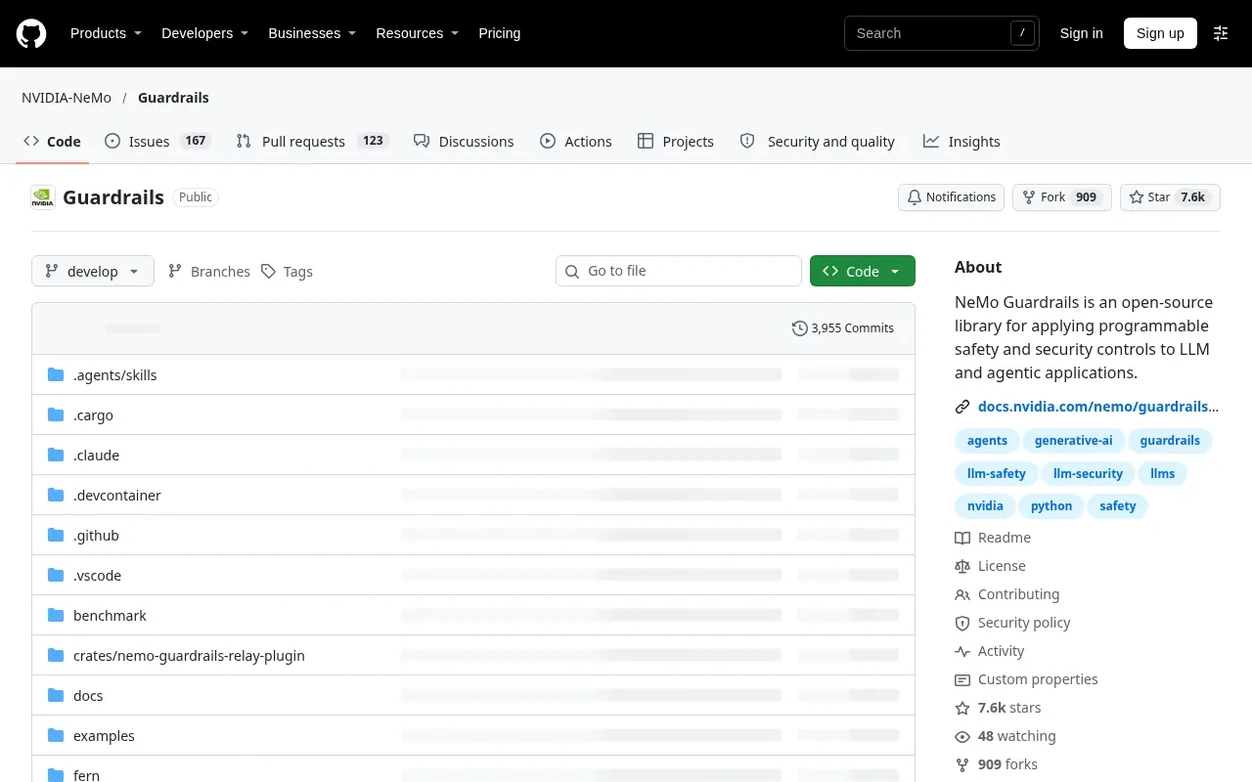
- NeMo Guardrails is open source with broad community adoption signals and a wide catalog of check types.
- NeMo Guardrails offers flexible deployment modes, including check mode, proxy mode and a server.
Differences
- Ejentum is delivered as a rule-lookup API with a free trial and paid tiers, while NeMo Guardrails is an open-source library installed with pip.
- Ejentum injects pre-built checklists from a fixed rule library, whereas NeMo Guardrails lets users declare their own policy and combine different check types.
- Ejentum states that it calls no secondary LLM, while NeMo Guardrails notes that model-backed checks call their configured model or service and that latency depends on configuration.